
Is Timothée Chalamet right about ballet?
Despite what Timothée Chalamet might think, ballet's not dead

Welcome to Gen Z Translator, where I break down trending topics on Fridays. If you’re new, you can subscribe here and follow me on Instagram. Views are my own. Happy reading!
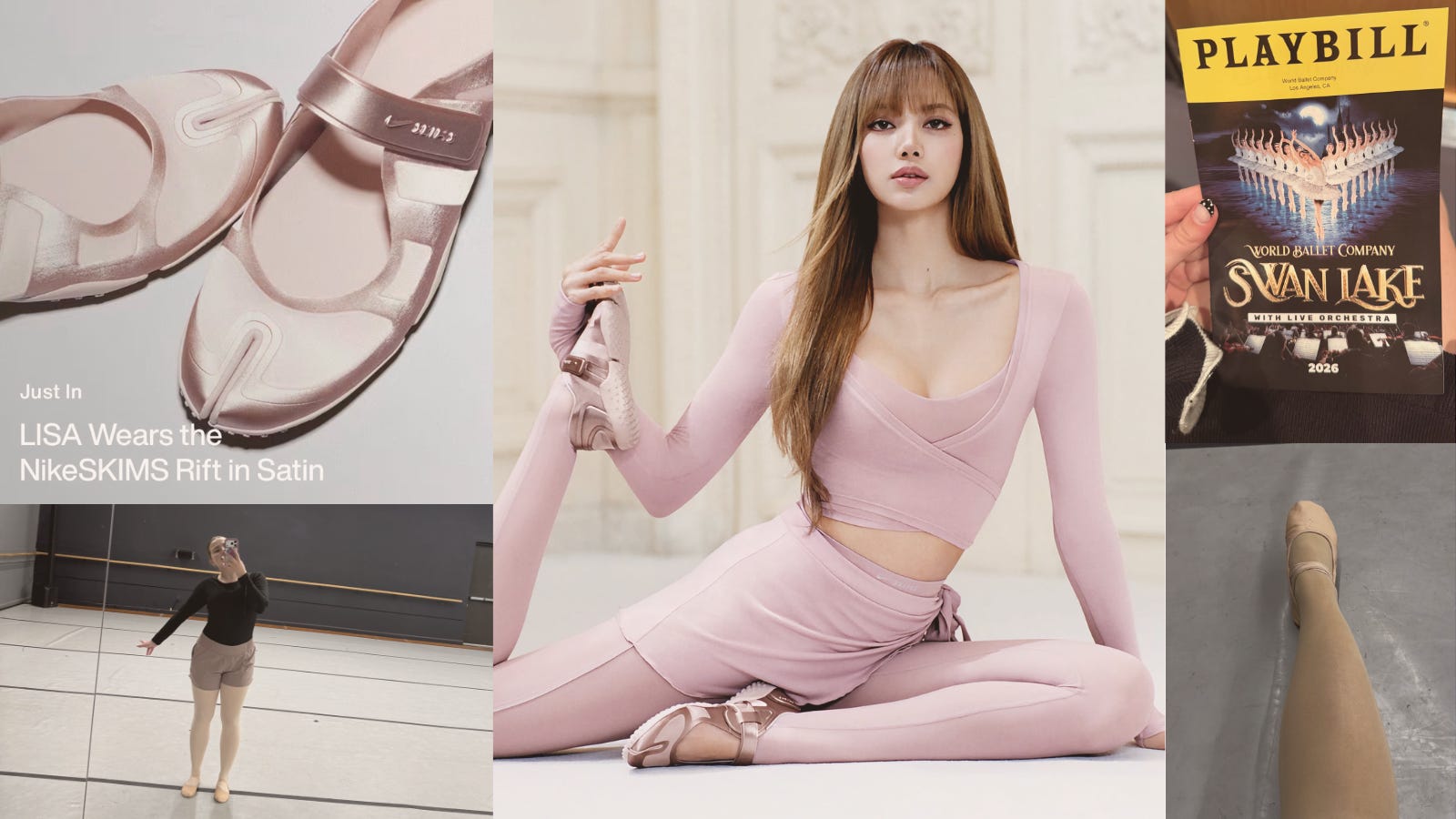
Ballet is having a renaissance, despite what Timothée Chalamet might think.
Timothée got in a bit of trouble after an interview with Matthew McConaughey where he remarked, “I don’t want to be working in ballet or opera, or you know, things where it’s like, ‘Hey, keep this thing alive,’ even though it’s like, no one cares about this anymore.”
Look, I’m not here to roast Timothée. The internet is already doing that job for me.
I don’t think he meant to be malicious. His observation came from how difficult it is for high art to survive right now in a media-inundated world that wants fast fashion, and vertical video slop, and AI-generated art. I mean, yeah, I don’t think you’d catch everyone taking three hours out of their day to go watch a four-act ballet. (I did, but we’ll get to that).
Who cares about opera and ballet?
Both Vanity Fair and TIME agreed with Timothée, to some extent.
“Once upon a time, opera and ballet were indeed popular entertainment. But it’s undeniably true that in contemporary American culture, they’re both propped up by wealthy patrons and donors, rather than the general public,” Chris Murphy wrote for Vanity Fair. “One viral TikTok highlighted how ballet and opera tickets are expensive – while movie tickets are cheap.”

But, it’s easy for Timothée to sit on his high horse when his own art is thriving, and his own image is beloved, and people go to watch his three hour movies without a second thought.
“There is something so deeply and specifically annoying about a person…who thinks he’s more high-brow than he actually is,” Louis Staples wrote for BETCHES.
Timothée’s statement was careless in itself, and the actor probably didn’t think it would be as psycho-analyzed as much as it is at present. Perhaps in his celebrity, he can shrug it off. He even covered for it in the same conversation he said it with “all respect to the ballet and opera people out there.”
But something that no one cares about anymore? Ouch.
Finding spaces where ballet is still alive
In 2023, one of my co-workers mentioned how she was taking an adult ballet class in her free time, and I thought that was so cool. It stayed on my mind ever since. It was one of those moments where I realized, Oh! Free will! That’s something a person can do.
I took a few dance classes as a child but never really saw it out. The pressure of performing and aggravating injuries made it more of a nuisance than not. Still, I thought after my conversation with my co-worker, That seems so fun and I would love to do it, but that could never be me.
Fast forward to 2026, I decided every year I want to pick up a new hobby. This year in particular, I found myself longing for the grace, flexibility, and structure that practicing ballet offers.
I got on a ballet kick after that, and I started seeing ballet everywhere. I watched the show Étoile, a rather overblown take on a ballet exchange program between New York City and Paris dancers, but still entertaining. My algorithm caught up, and I got recommendations for The Pointe Shop, where a woman reviews pointe shoes, and “Ballet with Matica,” where a bodybuilding dancer gets delightfully bullied by his instructor.
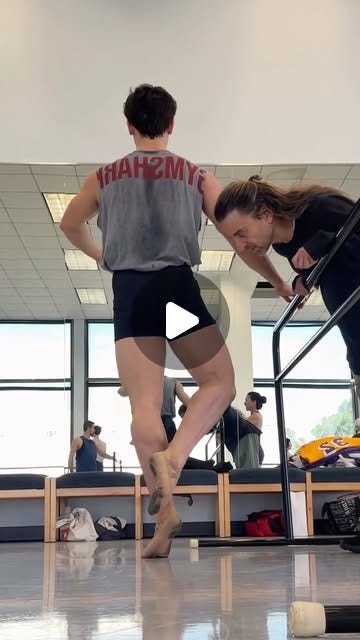
This is a classic chicken-and-the-egg question – did the algorithm influence me, or did I influence the algorithm? Let’s hope the latter. Regardless, I did some research and found a studio that was opening in my area that offered beginner classes to adults using a well-rounded approach, including elements of leadership and community.
After some internal back and forth where I almost booked, then didn’t, then changed my mind and signed up, I showed up to class, started in first position, and got to work learning pliés, rond de jambes, tendus, and battements.
And I wasn’t the only one – around the studio were women just like me ranging from their 20s to their 50s. Ask anyone why they were there and they would give a variation of the same answer: I just wanted to be able to get back into it, or I was never given the opportunity to learn, and I would love to now.
Of course I was terrified to show up that first day. I hadn’t worn a leotard in over a decade. I’m far past my “prime.” In fact, a huge barrier to entry was simply that I don’t have the body type of a ballerina. Ballet is not an everyday sport; you won’t find people talking about it like you do pickleball or tennis or golf. It is exclusive.
“For some, this is part of its appeal – only the best make it,” Chloe Angyal wrote for TIME.
But despite my hesitations, my ballet studio made everyone feel welcome, accommodating various skill levels and offering encouragements along the way. It was far different from how I remember dance as a child – and far more rewarding.

Let’s talk about “balletcore”
“Balletcore” is a very marketable aesthetic. Why is that? Because true balletcore is what I’d call a “rare aesthetic.”
Rare aesthetics are a collection of images posted on social media that feel a bit mystical and unattainable – an aesthetic that’s alluring, but that would be hard to get in real life. For example, you and me are probably not going to end up on pointe any time soon, which then makes a real-life ballerina’s aesthetic incredibly rare, intriguing, and enviable.
And, repeat it with me, exclusivity equals desireability.
In February, NikeSKIMS launched a ballet-themed campaign with pop star LISA, which they called “a fresh, ballet-inspired take on performance featuring new fabrics [and] silhouettes.” In it, the models wear baby pink coquette outfits, pull-over cardigans with ribbons, and probably the most hideous pair of camel-toe shoes I’ve ever seen.
Shoes aside, when a brand like NikeSKIMS gives their audience a chance to participate in this otherwise inaccessible aesthetic, it’s exciting! You mean someone like me who never has a chance of becoming a ballerina can still look and feel like one? (Maybe not at those price points, but I’m sure I can find knock-offs).

“Balletcore” has gone viral before.
Back when the “coquette” meme was going around in 2023/2024, we saw a bump in this aesthetic, too. It tied in nicely to the “clean girl” aesthetic. Think: neutral-colored capsule wardrobes, slicked-back hair, minimalistic makeup, a staple purse or accessory, and surprise, surprise, ballet flats.
Even though pink tights and black leotards aren’t required of my studio’s dress code, I wear them because I want to dress the part. I want to feel like a ballerina, even though that reality is not true. But for two times a week, I get to.
I walked around the mall the other day and everywhere, I saw brands like Alo, LuluLemon, and Aritzia replicating this style with smooth fabrics, pastel pink washes, and comfy fits, taking athlesiure to its next evolution.
So to say ballet is dying wouldn’t quite be accurate – I think ballet’s influence has been subtly reintegrating into culture for years now, especially in regards to fashion.
“Ballet-inspired fashion has always been subversive in its own right. Because ballet has always been the inflection point between many aspects of society –from high fashion to high-brow art to the highest echelons of society,” Jasmine Fox-Suliaman wrote for Who What Wear in 2024.
I walked around the mall the other day and everywhere, I saw brands like Alo, LuluLemon, and Aritzia replicating this style with smooth fabrics, pastel pink washes, and comfy fits, taking athlesiure to its next evolution.
So to say ballet is dying wouldn’t quite be accurate – I think ballet’s influence has been subtly reintegrating into culture for years now, especially on a fashion level.
The artistic subtext
We still can’t deny that ballet is inaccessible to the average person, as both an art and a practice. (Did I mention the bits of French you have to learn?)

“While striving for excellence is admirable, ballet’s obsession with excellence can make for a less-than-welcoming environment for those who just want to do it for fun,” Chloe Angyal wrote for TIME. “This is especially true for adults, who can struggle to find ballet classes where they don’t feel hopelessly behind because their parents didn’t put them in a leotard as soon as they were potty-trained. Encouraging amateurism would help ballet find fans (and paying customers) it currently dismisses.”
Absolutely heard. I believe we can find spaces where ballet is accessible again. As up-in-arms as everyone is about Timothée’s statement – some going as far to say this will cost him an Oscar – I think his comment is actually good for ballet and opera.
Why? Because now, people will make a conscious effort to prove him wrong. Maybe people will go support the arts more, or studios will open more adult ballet class. What’s that quote? “Be the change you wish to see in the world.”
If you had asked me a year ago about ballet classes, I would’ve replied skeptically with something like I’d love to, but my body can’t take it, or I’d love to, but I don’t look the part, or I’d love to, but I’m not sure what it’d lead to.
And that’s where I got it wrong. Because even if learning ballet is “not leading anywhere” in my professional life, in my personal life it’s leading to art and expression.
“We may now associate ballet as a high art form, but it’s often existed at inflection points of political movements, acting as a mirror to display wider societies’ ideas around gender, sexuality, and beauty itself,” Jasmine Fox-Suliaman wrote.
Mark my words: there will be a renaissance as art becomes more important during times of political unrest. In the 90s during the unsuccessful Soviet Union coup, Swan Lake was broadcast on a loop.
“Making art is radical because art is what moves people. Art reconnects us to the human experience we all share,” health coach Julie Pric said on Instagram. “The world does not need more exhausted spectators. The world needs makers.”

If not now, when?
If my foray into ballet has shown me anything, it’s that there’s a real desire to be able to experience dance with a childlike wonder at any age, celebrating the strength and beauty it takes just to show up when nobody else expects you to.
After beginning my classes, I made an effort to seek out ballet in a real life and found a one-night-only traveling production of Swan Lake, accompanied by a live orchestra. My dad and I went, dressed in our opera best, and for three hours we marveled at Tchaikovsky’s centuries-old score and the otherworldly talent of dancers as they extended their legs past what we thought humanly possible.
And even though I’m no prima ballerina, for those three hours, I felt part of a subculture.
I told anyone who would listen to me about the show, including my ballet instructor. We gushed about it before class. This week when I showed up to dance, she had choreographed a simple Swan Lake variation. I was ecstatic because, regardless where we were (an empty studio) or how many people were watching (zero), I was performing Swan Lake.
I felt the magnanimity of it – thousands of people practicing and performing this ballet, stretching across hundreds of years, and I got to be one, even if that was just for two minutes.
Once you find that high, it’s hard to imagine a world in which you don’t care about ballet anymore.

(Ironically I had planned on writing this piece before Timothée said anything. And yes, I want you to know the newsletter headline is coy and Gen Z for “I found a hobby.”)
Read my last story: No, it’s not possible to live an AI-free life

My weekly roundup:
🎶 What I’m Listening To: Tchaikovsky: Swan Lake, Op. 20, Act 2: No. 14, Scene. Moderato
🎞️ What I’m Watching: The Oscars on Sunday!
🔎 What I’m Reading: Plot and Structure by James Scott Bell
📱 What I’m Scrolling: Paris Fashion Week
⚠️ What’s On My Radar: Chappell Roan wants the public to respect her boundaries. Has anything changed since she first asked?
